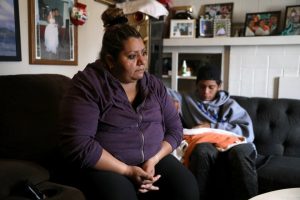
As our country makes its way through the coronavirus pandemic, history is happening fast. Generations from now, these days will make up whole chapters in the story of America. In this ongoing series, titled An Uncertain Distance, USA TODAY NETWORK photographers document the faces, the families, the playing fields, the farms, the factories – most of them in surreal states of being.


We found kindness, grief, boredom, puzzlement. We saw togetherness, aloneness, helpfulness, alienation. We captured scenes reflecting a common yet alien experience, where everything we see takes on a different shape, a new color, a newfound dimension. One overarching question looms: What will our “new normal” look like?
The novel coronavirus, unknown to Americans earlier this year, has thrown every aspect of our society into turmoil. The strains on all corners of the economy have evoked comparisons to the Great Depression, as five years of employment growth and stock market gains were wiped away in days. Nearly every student in the country is out of school. Parks, roads and beaches are empty – often by order of local or state authorities. Most of what people so recently took for granted now hangs in question.

Even as the coronavirus pandemic brought out some of Americans’ deepest fears, it also summoned their better angels. In Evansville, Ind., Lashawn Miles offers squirts of hand sanitizer to people who gathered for Salvation Army lunch program March 18.Denny Simmons, Evansville Courier & Press
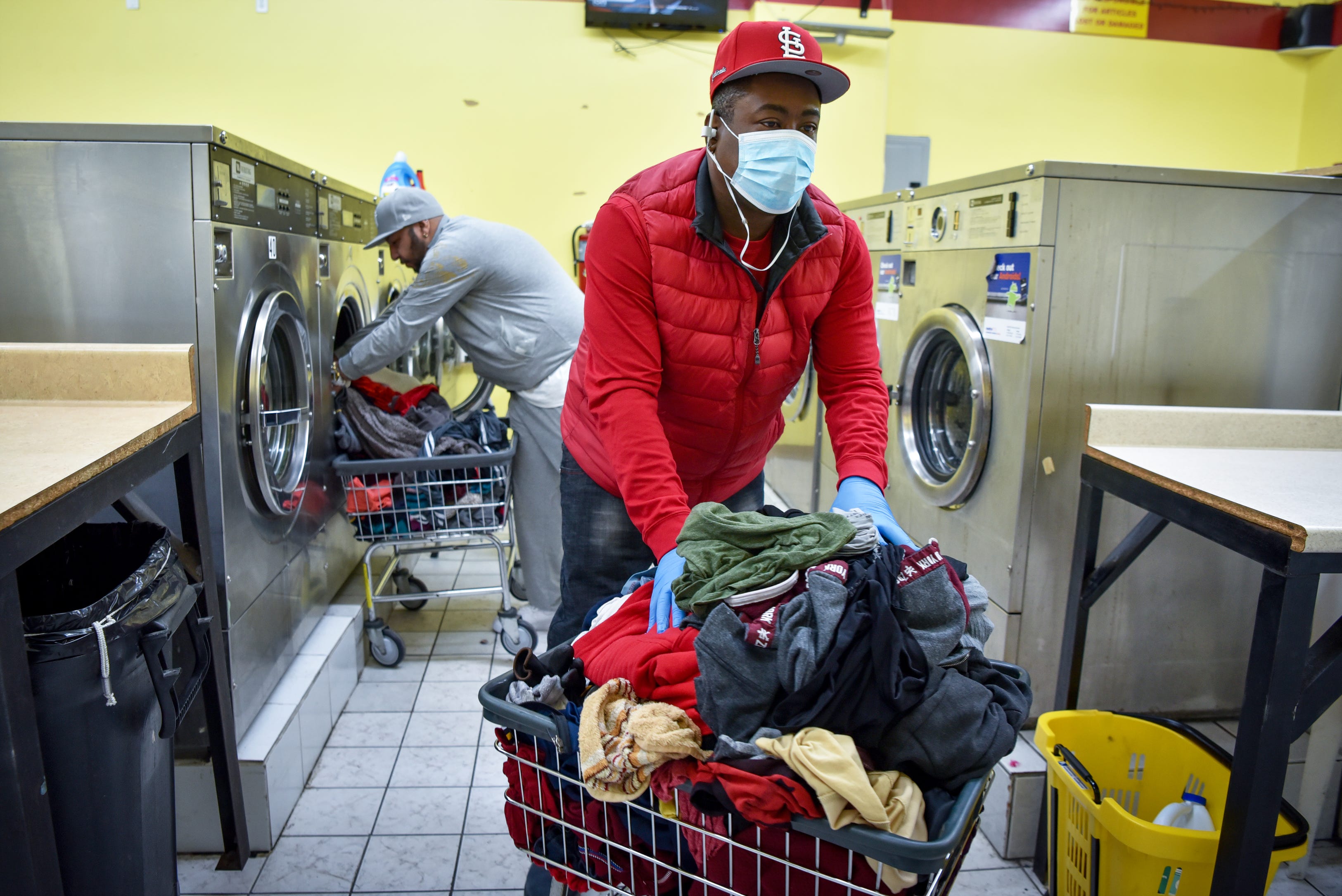
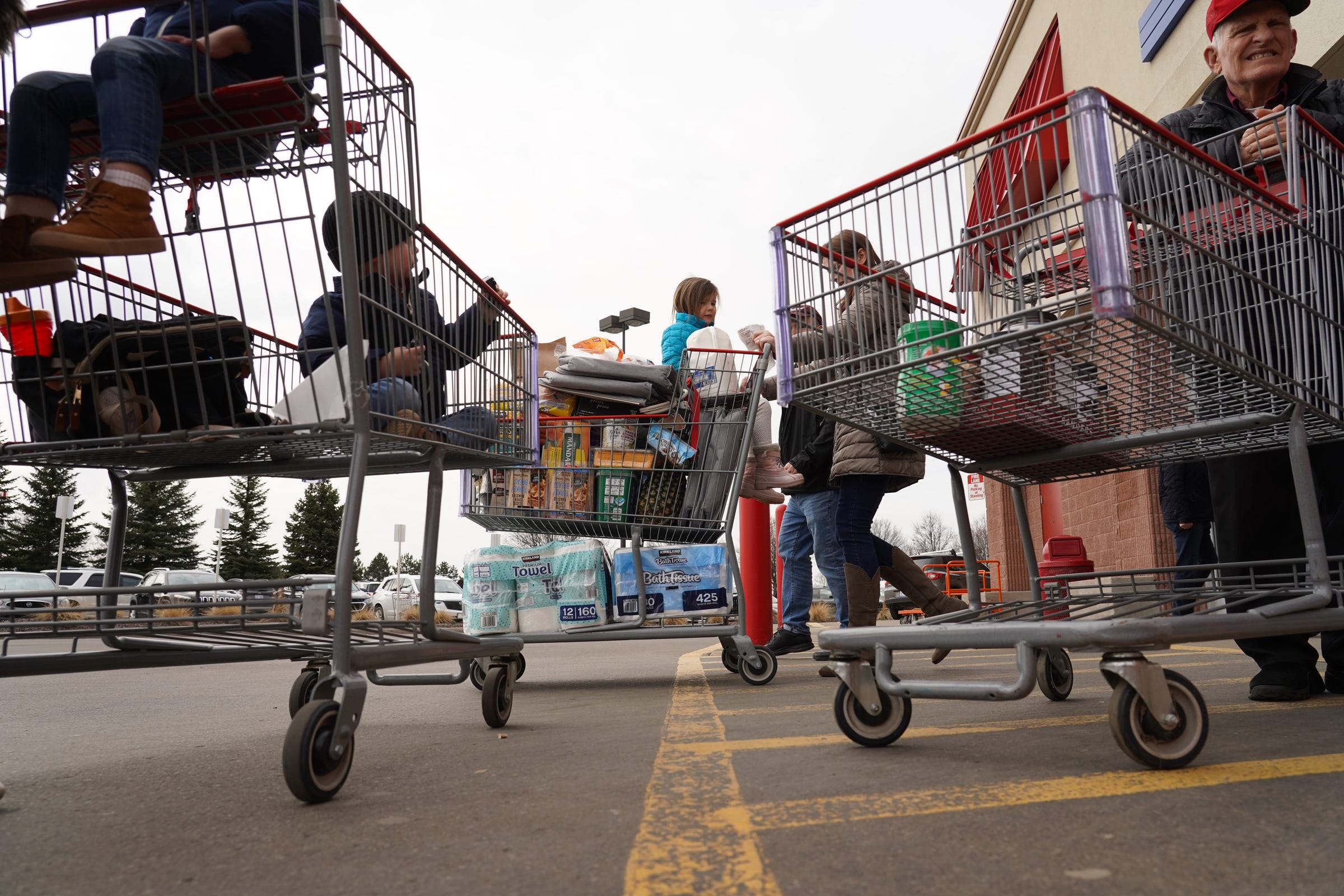
The coronavirus’ rapid spread sent many Americans rushing to stores to stock up on food supplies, often leaving store shelves stripped. At a Costco in Auburn Hills, Mich., shoppers were out in force March 11. In extraordinary times, daily routines still go on. Sammy Irizarry, mindful of the diabetes and high blood pressure that make him especially vulnerable to COVID-19, washes his clothes at Tri-City Laundromat in Passaic, N.J. The coronavirus’ rapid spread sent many Americans rushing to stores to stock up on food supplies, often leaving store shelves stripped. At a Costco in Auburn Hills, Mich., shoppers were out in force March 11. In extraordinary times, daily routines still go on. Sammy Irizarry, mindful of the diabetes and high blood pressure that make him especially vulnerable to COVID-19, washes his clothes at Tri-City Laundromat in Passaic, N.J. LEFT: The coronavirus’ rapid spread sent many Americans rushing to stores to stock up on food supplies, often leaving store shelves stripped. At a Costco in Auburn Hills, Mich., shoppers were out in force March 11. RIGHT: In extraordinary times, daily routines still go on. Sammy Irizarry, mindful of the diabetes and high blood pressure that make him especially vulnerable to COVID-19, washes his clothes at Tri-City Laundromat in Passaic, N.J. RYAN GARZA, DETROIT FREE PRESS; AMY NEWMAN, North Jersey Record
I have seen some amazing moments of hope, kindness and bravery during this time in our community. Volunteers stepping up to help, neighbors finding ways to support each other while being apart, medical workers stepping forward to save lives, faith leaders finding new ways to reach their congregations and so on.
As the virus spread, schools closed their doors and students scrambled to change their plans. Florida A&M University freshmen twin sisters Jaelen and Jazlen Patrick, 18, pack up their belongings in their dorm in Tallahassee, Fla., after they were informed the remainder of the spring semester would be conducted online. Americans responded as health care officials recommended a variety of practices to help slow the spread of the virus. Students at the IDEA Rundberg charter school in Austin, Texas, wash their hands on April 1. Government officials and the news media did their part to help slow the virus’ spread while keeping the public informed. News reporters practice social distancing for a daily briefing March 25 at the Ohio Statehouse in Columbus. As the virus spread, schools closed their doors and students scrambled to change their plans. Florida A&M University freshmen twin sisters Jaelen and Jazlen Patrick, 18, pack up their belongings in their dorm in Tallahassee, Fla., after they were informed the remainder of the spring semester would be conducted online. Americans responded as health care officials recommended a variety of practices to help slow the spread of the virus. Students at the IDEA Rundberg charter school in Austin, Texas, wash their hands on April 1. Government officials and the news media did their part to help slow the virus’ spread while keeping the public informed. News reporters practice social distancing for a daily briefing March 25 at the Ohio Statehouse in Columbus. TOP: As the virus spread, schools closed their doors and students scrambled to change their plans. Florida A&M University freshmen twin sisters Jaelen and Jazlen Patrick, 18, pack up their belongings in their dorm in Tallahassee, Fla., after they were informed the remainder of the spring semester would be conducted online. LEFT: Americans responded as health care officials recommended a variety of practices to help slow the spread of the virus. Students at the IDEA Rundberg charter school in Austin, Texas, wash their hands on April 1. RIGHT: Government officials and the news media did their part to help slow the virus’ spread while keeping the public informed. News reporters practice social distancing for a daily briefing March 25 at the Ohio Statehouse in Columbus. Alicia Devine, Tallahassee Democrat; JAY JANNER, AUSTIN AMERICAN-STATESMAN; JOSHUA A. BICKEL, COLUMBUS DISPATCH
I have photographed a lot of disasters but I’ve never covered a pandemic. I’m seeing things in my town I never thought I’d see, and it’s still unfolding. The enormous scale of the pandemic is unimaginable, but I’m trying to document some of the little details that show how my community is responding.

Shelter-in-place orders left neighborhoods, city streets and major thoroughfares eerily empty. On March 25, light traffic flows on the normally busy MoPac Boulevard and U.S. 290 in southwest Austin, Texas.Jay Janner, Austin American-Statesman
“Sheltering in place” is a concept few Americans ever have had to consider. Now it’s the daily existence for most people – with no clear end in sight. It has meant closures, postponements, displacements and cancellations of the events Americans have cherished most. The more than 300 million inhabitants of our country have had to think hard about how every little act could affect themselves, their families and their communities.
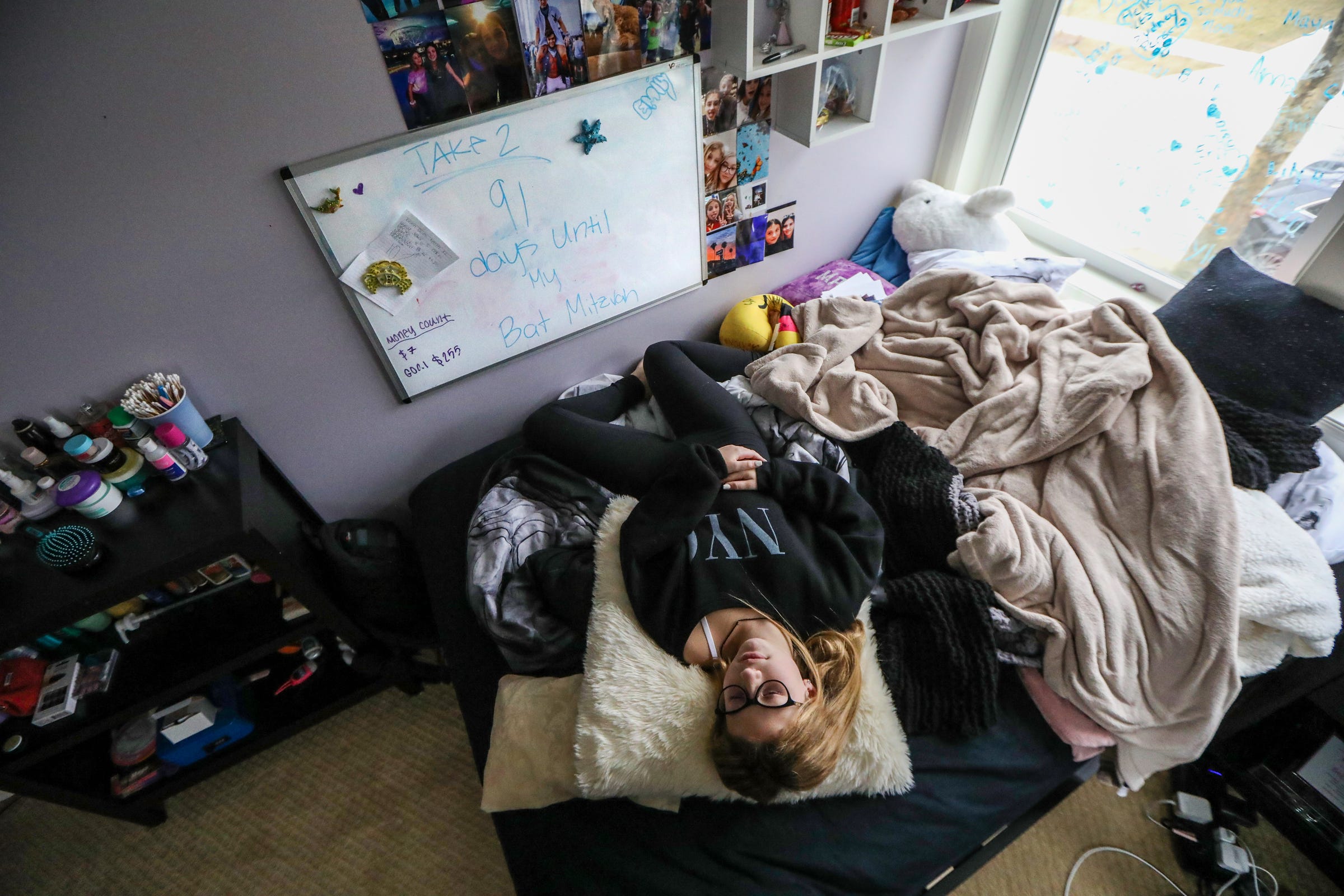
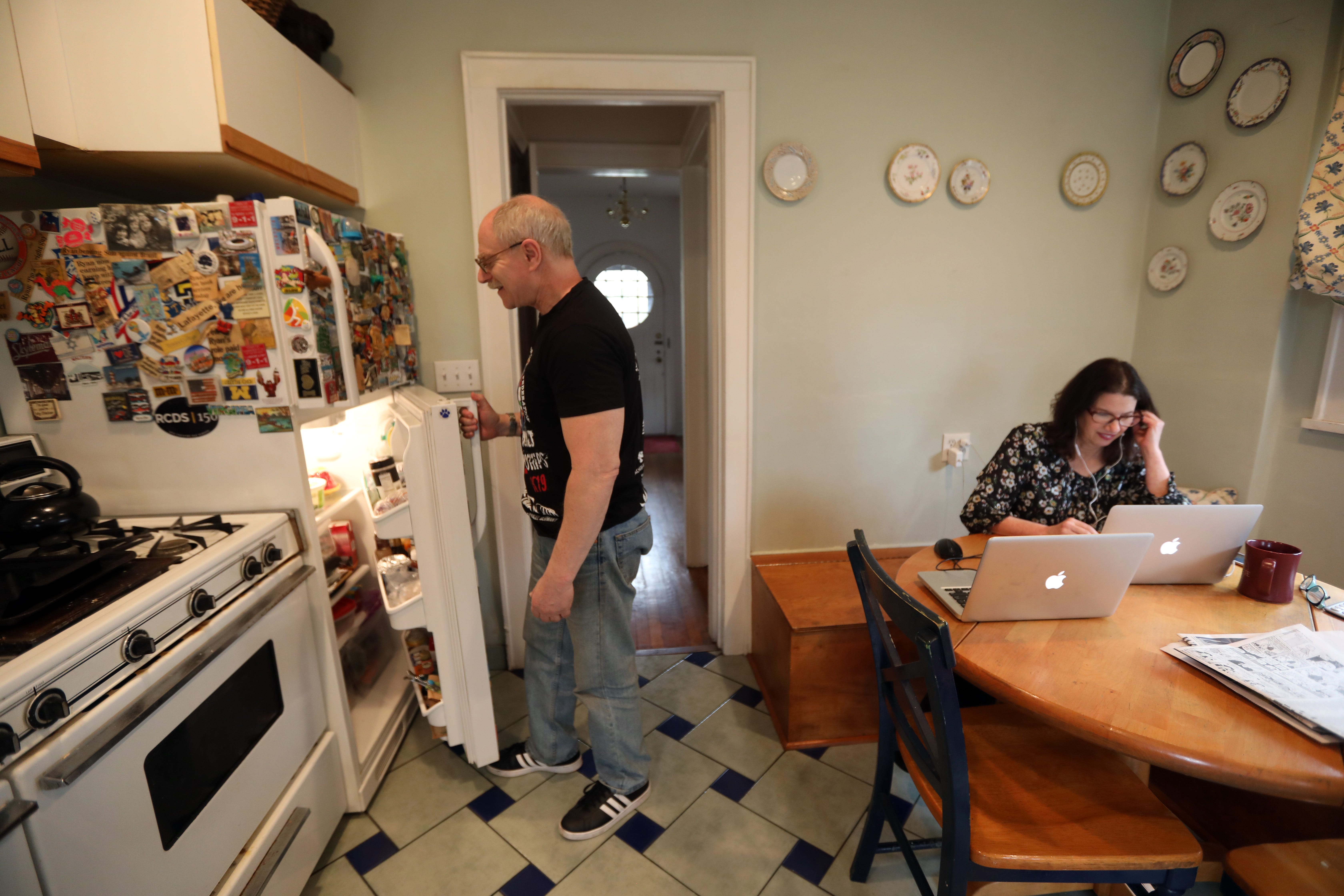
The outbreak also put cherished traditions on hold. Maya Belen, 12, has started a new countdown for her bat mitzvah, a Jewish coming-of-age ceremony, at her home in Birmingham, Mich., on March 14. The ceremony has been postponed until June. Working from home has become a way of life amid the pandemic. Judy Herbst, director of marketing for Worthy.com, an online auction house, works remotely in Larchmont, N.Y., along with her husband, Robert, who also works from home (and often interrupts her while she’s on a conference call). The outbreak also put cherished traditions on hold. Maya Belen, 12, has started a new countdown for her bat mitzvah, a Jewish coming-of-age ceremony, at her home in Birmingham, Mich., on March 14. The ceremony has been postponed until June. Working from home has become a way of life amid the pandemic. Judy Herbst, director of marketing for Worthy.com, an online auction house, works remotely in Larchmont, N.Y., along with her husband, Robert, who also works from home (and often interrupts her while she’s on a conference call). LEFT: The outbreak also put cherished traditions on hold. Maya Belen, 12, has started a new countdown for her bat mitzvah, a Jewish coming-of-age ceremony, at her home in Birmingham, Mich., on March 14. The ceremony has been postponed until June. RIGHT: Working from home has become a way of life amid the pandemic. Judy Herbst, director of marketing for Worthy.com, an online auction house, works remotely in Larchmont, N.Y., along with her husband, Robert, who also works from home (and often interrupts her while she’s on a conference call). KIMBERLY P. MITCHELL, DETROIT FREE PRESS; TANIA SAVAYAN, Rockland/Westchester Journal News

Widespread school closings have left many children and families in need. David L. Mackenzie Elementary-Middle school food services employees Cora Johnson and Roderick Bailey, help prepare breakfasts and lunches March 18 in Detroit, where the public schools system has set up a Grab and Go curbside pickup program.Mandi Wright, Detroit Free Press

Lockdowns across the country have hit small businesses hard. Former employees at Redfire Grill in Hockessin, Del., came in on their own to help owner Carl Georigi shut down and sort through perishable food for his workers to take home on March 17. Georigi had to lay off nearly 400 employees across his six restaurants.Jerry Habraken, Delaware News Journal

The faithful usually gather to worship, but faith starts at home, too. Noha Eyada and her children, Yahia, 19, and Yusuf, 8, observe the call to prayer from the Islamic Center of Greater Cincinnati in West Chester, Ohio, on March 20.Meg Vogel, Cincinnati Enquirer
Noha Eyada welcomed us into her home to watch her family pray in their living room… [As a photojournalist] I’m not able to get close to people. I’m not able to spend lots of time with people… But like Noha and her family, we are all making adjustments and sacrifices. I’m finding new ways to connect with people and to tell stories.
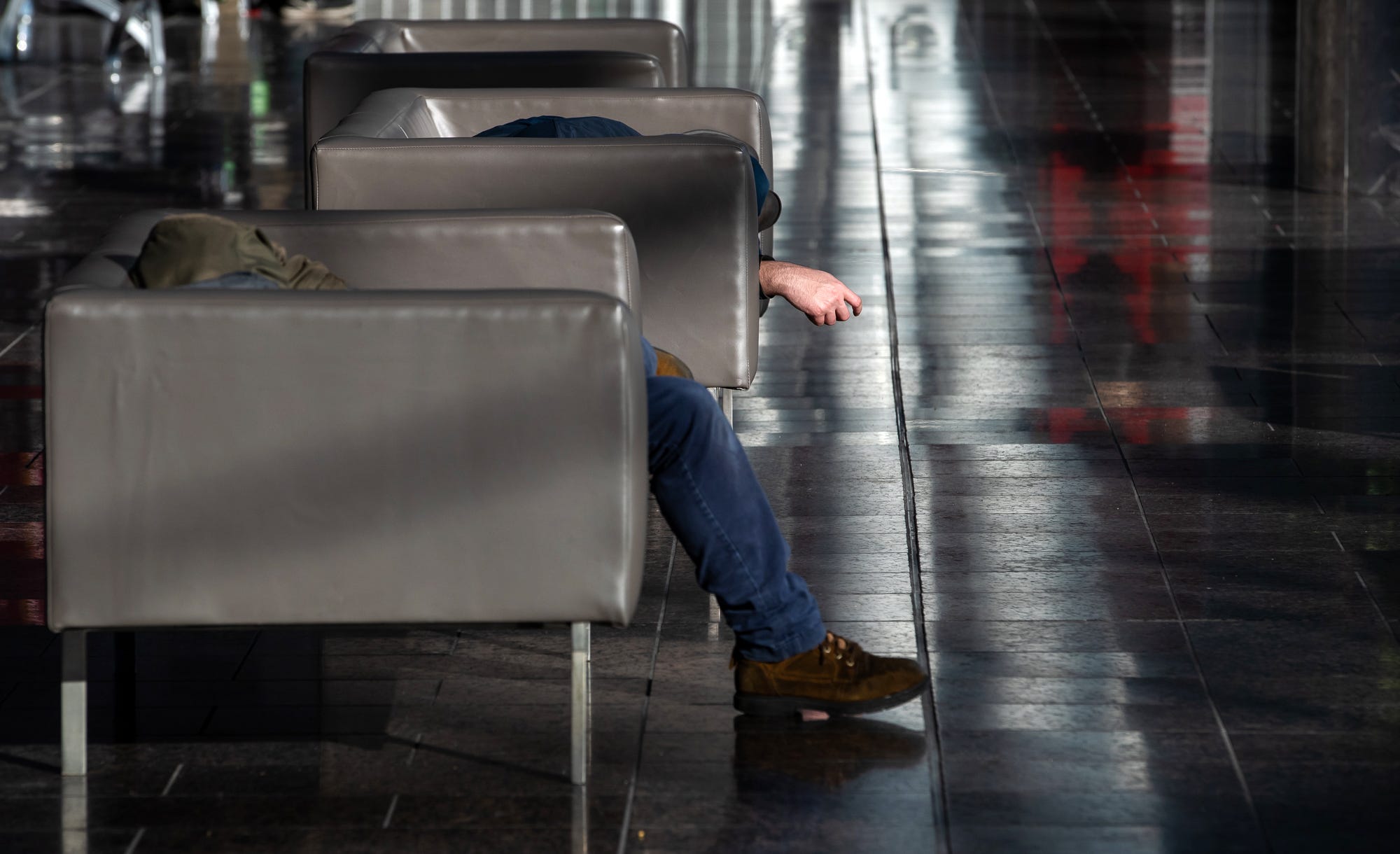
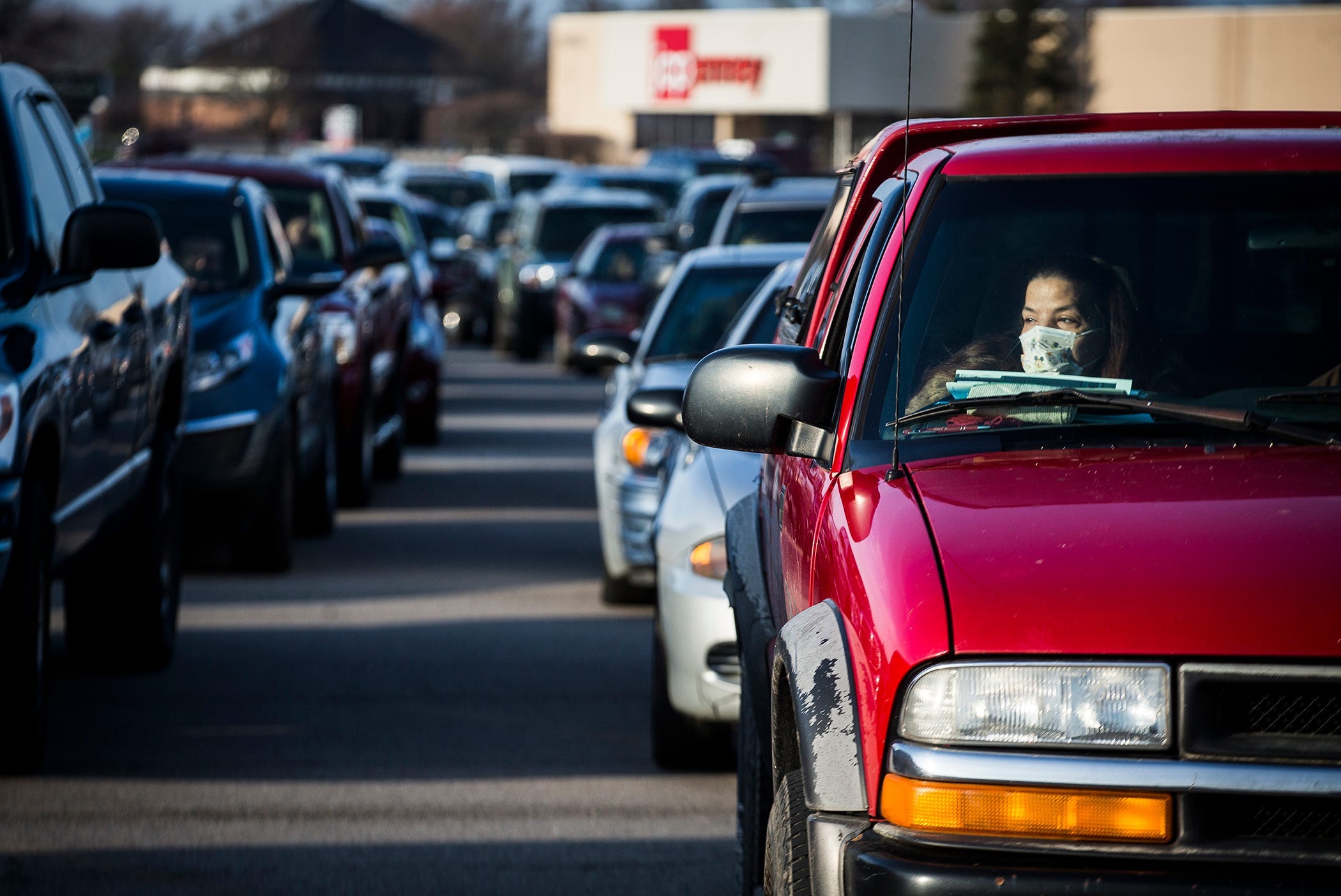
As unnecessary travel shut down around the country, airports such as Indianapolis International Airport were left eerily empty. When disaster strikes, American generosity shines through. More than 400 cars wait outside Muncie Mall in in Muncie, Ind., on March 27 for a Second Harvest Tailgate organized to distribute food to families in need. As unnecessary travel shut down around the country, airports such as Indianapolis International Airport were left eerily empty. When disaster strikes, American generosity shines through. More than 400 cars wait outside Muncie Mall in in Muncie, Ind., on March 27 for a Second Harvest Tailgate organized to distribute food to families in need. LEFT: As unnecessary travel shut down around the country, airports such as Indianapolis International Airport were left eerily empty. RIGHT: When disaster strikes, American generosity shines through. More than 400 cars wait outside Muncie Mall in in Muncie, Ind., on March 27 for a Second Harvest Tailgate organized to distribute food to families in need. MYKAL MCELDOWNEY, Indianapolis Star; JORDAN KARTHOLL, Muncie Star Press
Americans have begun to adjust to a new normal. “Virtual happy hours” have replaced gatherings of more than a few people in the same place. Visits with loved ones have become strained as families waved to grandparents through windows. Even as communities have tried to rally together by staying apart, the number of coronavirus cases has increased and the death toll has steadily risen.

Even the way we say hello has changed. Personal trainer Odie Tolbert, right, elbow-bumps Annika Adams after a workout at Shabazz Fitness in Cordova, Tenn., on March 18.Max Gersh, Memphis Commercial Appeal

Communities made the best of lockdowns as Americans pulled together to fight the spread of the virus. In Eugene, Ore., Mary Lou Vignola, center, waves to her neighbors during a socially distant block party she and her husband, Frank, helped organize March 21.Chris Pietsch, Eugene Register Guard

For people whose loved ones are on the front lines of the pandemic, getting close has never been so complicated, or so heartbreaking. Cheryl Norton wanted to hug her daughter, an ICU nurse, so much that she draped her with a covering to steal a brief, tight embrace April 3 in Cincinnati.Liz Dufour, Cincinnati Enquirer
I’m used to putting myself in situations that may be unsafe, but it’s not just about my safety anymore. I think about those I photograph, and wonder if I could be potentially harming them; I think about my grandma and hope that those who may come in contact with her consider her safety, and understand it is their responsibility now.

Assisted-living facilities have been the scene of painful separations because of residents’ vulnerability to the virus. Marie DeBoer, 92, blows a kiss goodbye to her family March 23 at Edgewood Assisted Living in Sioux Falls, S.D.Abigail Dollins, Sioux Falls Argus Leader

The swiftness of the virus’ spread forced cities and hospitals to scramble to prepare for an expected crush of patients. A worker looks over plans April 1 at the TCF Center in Detroit, where 1,000 beds were being assembled.Eric Seals, Detroit Free Press
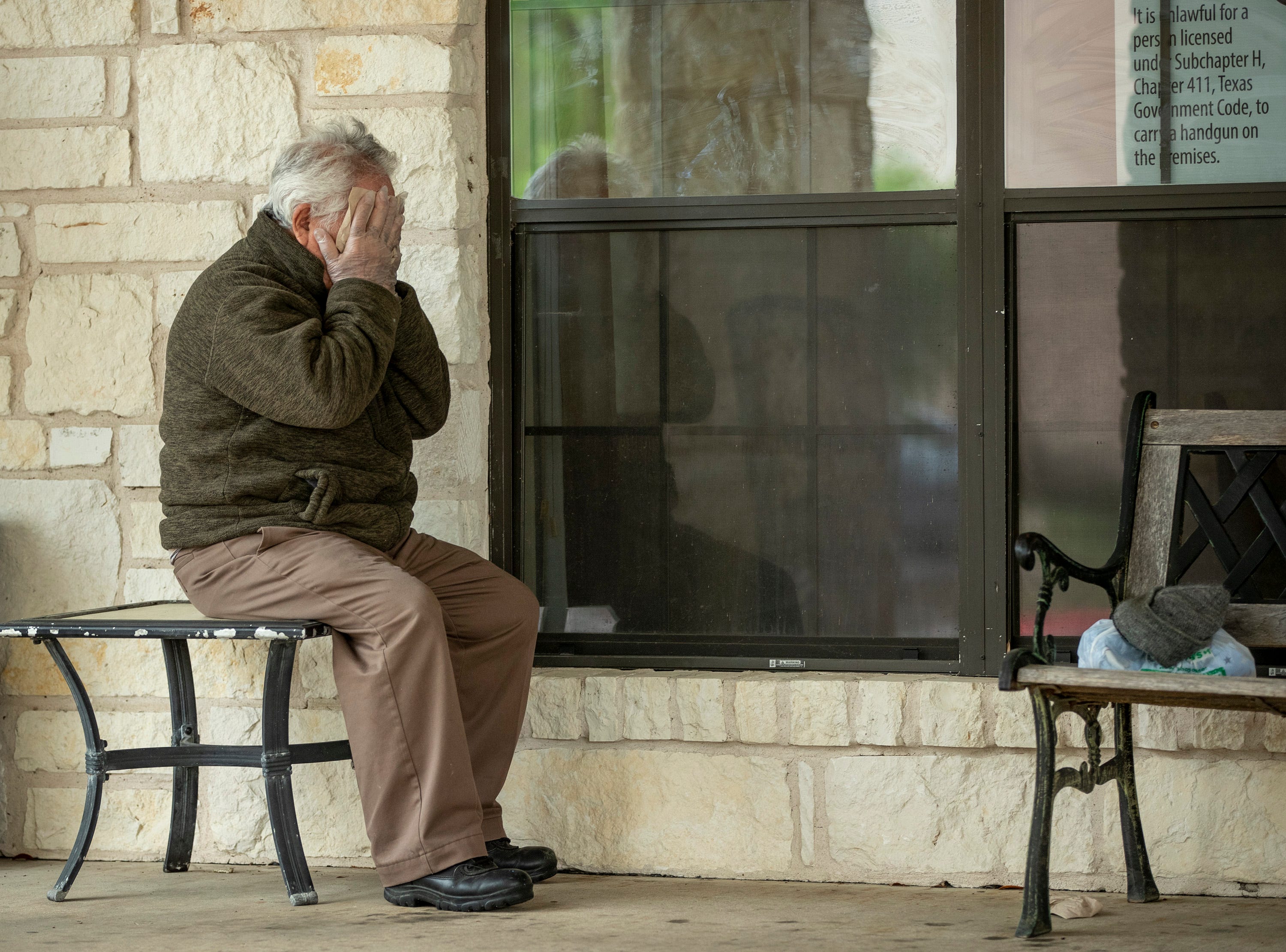
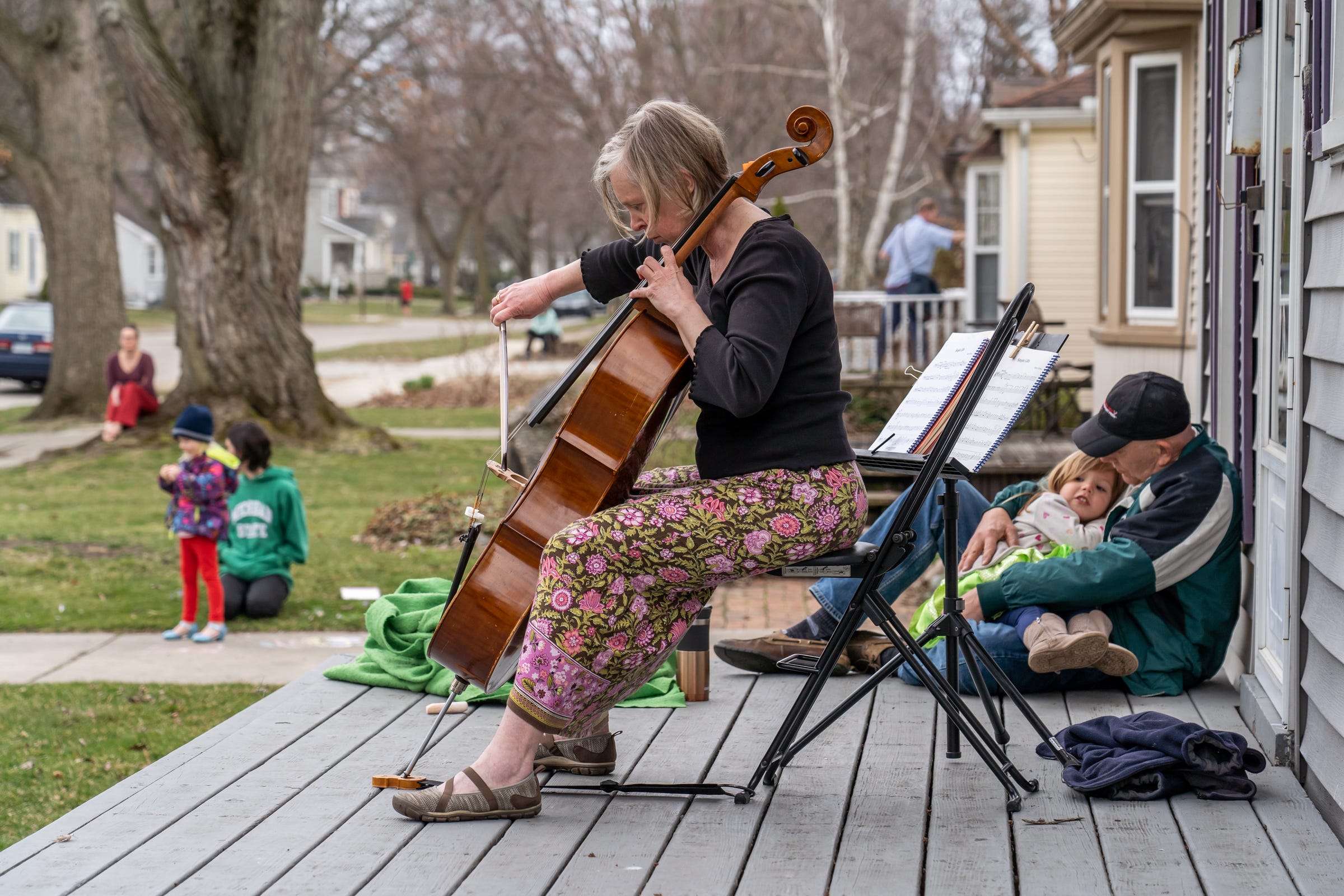
Gusto Monterrosa cries after talking through a window with his daughter who lives at Park Bend Health Center in North Austin on Sunday, March 22, 2020, amid the coronavirus pandemic. Irina Tikhonova plays the cello on her front porch in Royal Oak for neighbors and people passing by as her husband Fred Trimble holds their 4-year-old granddaughter, Mia, on Thursday, March 26, 2020. Gusto Monterrosa cries after talking through a window with his daughter who lives at Park Bend Health Center in North Austin on Sunday, March 22, 2020, amid the coronavirus pandemic. Irina Tikhonova plays the cello on her front porch in Royal Oak for neighbors and people passing by as her husband Fred Trimble holds their 4-year-old granddaughter, Mia, on Thursday, March 26, 2020. LEFT: Gusto Monterrosa cries after talking through a window with his daughter who lives at Park Bend Health Center in North Austin on Sunday, March 22, 2020, amid the coronavirus pandemic. RIGHT: Irina Tikhonova plays the cello on her front porch in Royal Oak for neighbors and people passing by as her husband Fred Trimble holds their 4-year-old granddaughter, Mia, on Thursday, March 26, 2020. JAY JANNER, AUSTIN AMERICAN-STATESMAN; RYAN GARZA, DETROIT FREE PRESS
I am so used to being physically out in the community, meeting people and getting stories more organically, that it’s been a challenge trying to cover the news in my area as well as staying safe for everyone. It feels like [photojournalists] are doing more “natural disaster” coverage in terms of how the day-to-day changes on the hour and how there’s a risk going outside my home. But I feel the importance of what we do is paramount during this time.

Because of social distancing practices, funeral homes nationwide have had to balance tradition and emotion with keeping people safe. Noe Lopez Jr, left, does a pre-service walk-through March 25 with an employee at Saxet Funeral Home in Corpus Christi, Texas.Annie Rice, Corpus Christi Caller Times