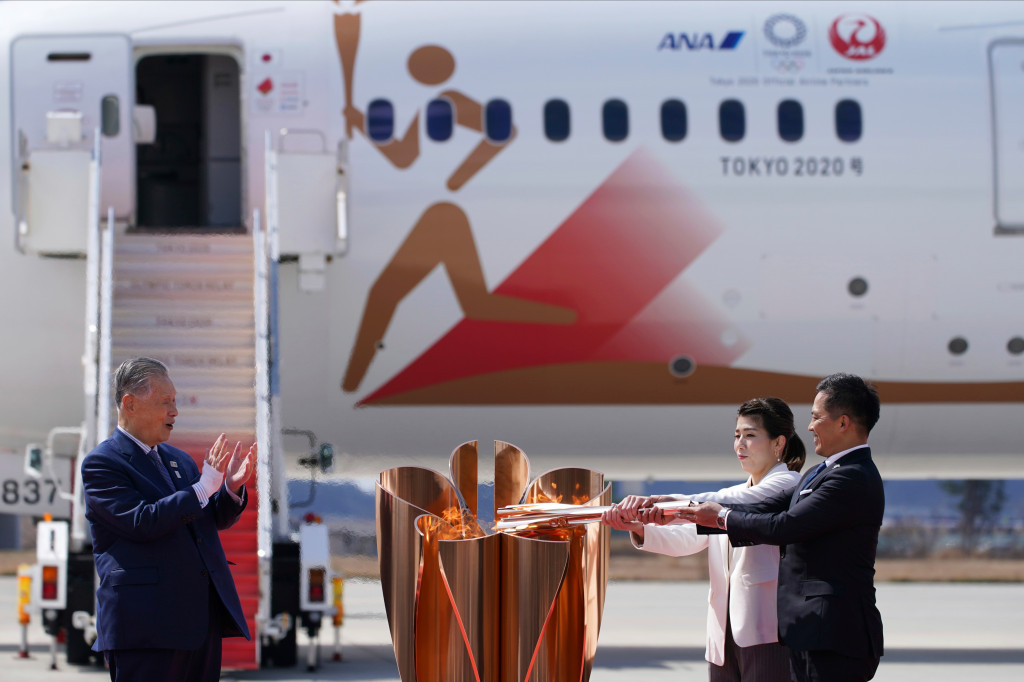
Dick Pound, a long-time member of the International Olympic Committee, said Monday that he believed the decision to postpone the 2020 Tokyo Games has been made in the wake of the coronavirus pandemic.


However, Anita DeFrantz, an IOC vice president from Santa Monica, told this news organization that no decision has been made.
“The IOC did not make that decision,” she said Monday. “He’s either right or he’s wrong. I don’t have that ability to tell the future. I think most people would say it doesn’t look good.”
Pound, a Canadian who helped launch the World Anti-Doping Agency, said in an interview from Montreal that he concluded the decision already has been made based on the IOC’s statements Sunday saying it would announce its intent within four weeks.
“If you are accustomed to IOC speak, what this did was put the P word — postponement –on the table,” Pound said. “That is clearly what they decided to do.”
Pound said the postponement “is the only other logical possibility” as national Olympic committees in Australia, Brazil, Canada, France and other countries said they do not want to send their athletes to Tokyo for the July 24-Aug. 9 event. The 2020 Paralympics are scheduled for Aug. 25-Sept. 6.


“Look at the curve on new cases,” Pound said of fast-spreading COVID-19. “We’re not going to get out of that mess in 2020.”
The IOC announced Sunday that it would spend the next four weeks figuring out the best option on how to continue. Some in the Olympic community complained the leadership was not moving quickly enough and leaving athletes with too much uncertainty.
DeFrantz said it was difficult to decide within a day how to proceed.
“Therein lies our challenge,” she said. “We literally don’t know what tomorrow will bring.”
DeFrantz added that she would not be surprised if the IOC’s executive board meets soon in the aftermath of Pound’s comments, first reported by USA Today.
“We want to be clear and not confuse people,” DeFrantz said.
Pound said in an interview that the IOC’s reason to delay making a public announcement is because of the complex nature of pushing the Summer Olympics to 2021. IOC leaders also said that canceling the Games is not an option.
“Four weeks will be a miracle if they can get it all done,” he said. “But at least they will be in a position with what the general profile of the thing will look like. There are so many unanswered questions. How do you get into facilities? What will be available?”
DeFrantz said it essential that the IOC is careful in making the decision.
“We have to remember we are not the center of the earth,” she said of Americans. “We too often think what is happening to us is happening everywhere else in the world and it’s not. Some parts of the world are ahead and others are behind, they haven’t even had it yet. We just don’t know what next week will bring.”
DeFrantz, an Olympic rower who led the fight to try to allow U.S.athletes compete in the boycotted Moscow Games in 1980, said her primary concern is for those preparing for the Tokyo Games.
“It’s not something that you turn on and off like a faucet,” she said. “So many decisions athletes have made with their lives in order to be prepared to compete. So many decisions organizers have made with their lives. A lot of people who put a lot into it. And they come from every part of the world.”
But DeFrantz said she understands everyone is living in a time of new decisions and big changes.
“The Games will happen,” DeFrantz said. “I know where but maybe not when.”