

By Tyler Durden


A recent survey of 2,000 Americans
carried out by “innovation consultancy” Highland took a
close look at how personal finances and spending habits have
changed since the start of the COVID-19 pandemic, which crushed the
US economy and has triggered a protracted downturn around the
world.
With the US labor
market adding just 245K new jobs last month, a sign that the
sharp rebound from the chaos of March has already run its course,
and millions of Americans waiting on more stimulus from Washington,
the share of people living check to check has expanded rapidly.
Even before the pandemic, a staggering percentage of Americans
didn’t have enough cash on hand for an unexpected hardship of
$400. But what’s even worse for America’s consumption-driven
economy is that a solid majority of Americans have reduced
spending, some dramatically, as the pandemic has made socialization
difficult. According to the survey, 63% have cut back on spending
since the start of the pandemic.
Asked for their reasons, respondents cited the need to be more
cautious with their finances (60%), experiencing a reduced salary
or income (49%), and staying home more often (40%).

For those who have cut back, 64% say they are spending less on
dining out or takeout, 61% have reduced spending on entertainment
such as concerts or movies, while 55% are buying less apparel and
52% are spending less on travel.


It is interesting to note that 21% of respondents say they have
been spending more since the pandemic. Of those respondents, 51%
say they are buying more food or groceries, and 50% are buying more
household supplies.
After the unemployment rate spiked to more than 14% in April,
Americans continue to be wary about their job security and income.
According to respondents, more than a quarter feel they do not
currently have a stable income, and 63% say they have been living
paycheck to paycheck since the pandemic. Millennials appear to be
the hardest hit demographic as 64% say they are living paycheck to
paycheck.
Moreover, 25%� of respondents feel they don’t currently have a
stable income.

27% of respondents also said they’ve taken on more than $10K
in debt.

But perhaps the most alarming number from the entire survey: a
whopping 82% of respondents said they wouldn’t be able to cover
an emergency $500 expense without borrowing money.
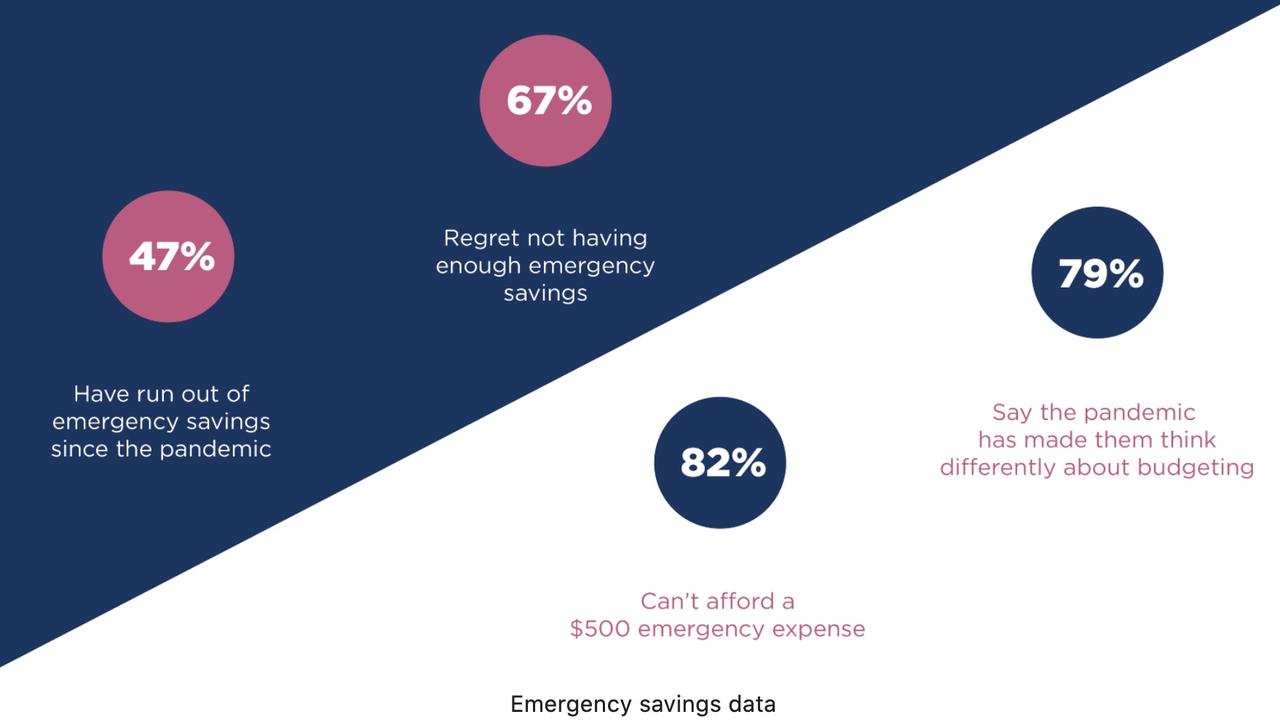
For context, prior to the pandemic, surveys showed that roughly
half of Americans couldn’t afford a $500 emergency expense, which
means the number of people who say they couldn’t cover a small
emergency has risen by 60%.
Nearly half added that they now regret living
beyond their means for so long before the crisis.
But the market’s at record highs, so at least those who have
the option can borrow against their 401(k)s for a little emergency
cash (that is, if they have a 401(k)).
Source:
Zero Hedge
Image: Pixabay
Subscribe
to Activist Post for truth, peace, and freedom news. Send
resources to the front lines of peace and freedom HERE! Follow us on
SoMee,
HIVE, Parler, Flote, Minds, MeWe and Twitter.
Provide, Protect and Profit from what’s coming!
Get a free issue of Counter
Markets today.
82% Of Americans Say They Couldn’t Afford $500 Emergency Thanks
To COVID-19


