It was the second largest number of initial unemployment claims in history, since the Department of Labor started tracking the data in 1967.
Altogether, roughly 16.8 million American workers, making up about 10% of the US labor force, have sought aid in the form of jobless benefits in just the prior three weeks alone. About 7.5 million workers received their second week of benefits or more last week.
Numbers at that level are startling and contrast starkly with any other economic downturn on record, especially because of how quickly they’ve surged.
Job losses during the Great Recession for example — as deep as they were — came at a much slower pace. It took two years for 8.6 million Americans to lose their jobs in that crisis. This time around, as businesses across the country close to slow the spread of coronavirus, the unemployment crisis has been far more acute, condensed into just a few weeks.
How bad can it get?
Economists are expecting job losses will continue, with the unemployment rate peaking in the double digits sometime in the next few months, up from 4.4% in March. Bank of America economists predict employers will cut between 16 million and 20 million jobs, with the unemployment rate peaking at 15.6% between now and June. If that’s the case, it could take at least a couple years for unemployment to return to its pre-pandemic levels.
The recoveries from both those downturns were painfully slow, dragging on for years. Economists are hoping the recovery from this downturn will be faster, but ultimately, that will depend on when the coronavirus outbreak is contained.
Aid from the government
In the meantime, government stimulus could help some workers pay their bills. Congress included a historic expansion of unemployment benefits in its $2.2 trillion relief package passed two weeks ago. It includes a $600 weekly increase for up to four months, on top of state unemployment benefits. Workers in some states will start to receive those extra benefits this week.
State labor agencies have been upgrading their servers and adding staff, as they struggle to keep up with the sudden influx in claims. In many states, the computer systems that process claims run on a decades-old programming language known as COBOL. After his state was inundated with skyrocketing claims, New Jersey Governor Phil Murphy put out a call for volunteers who know how to code in COBOL to help maintain the overloaded system.
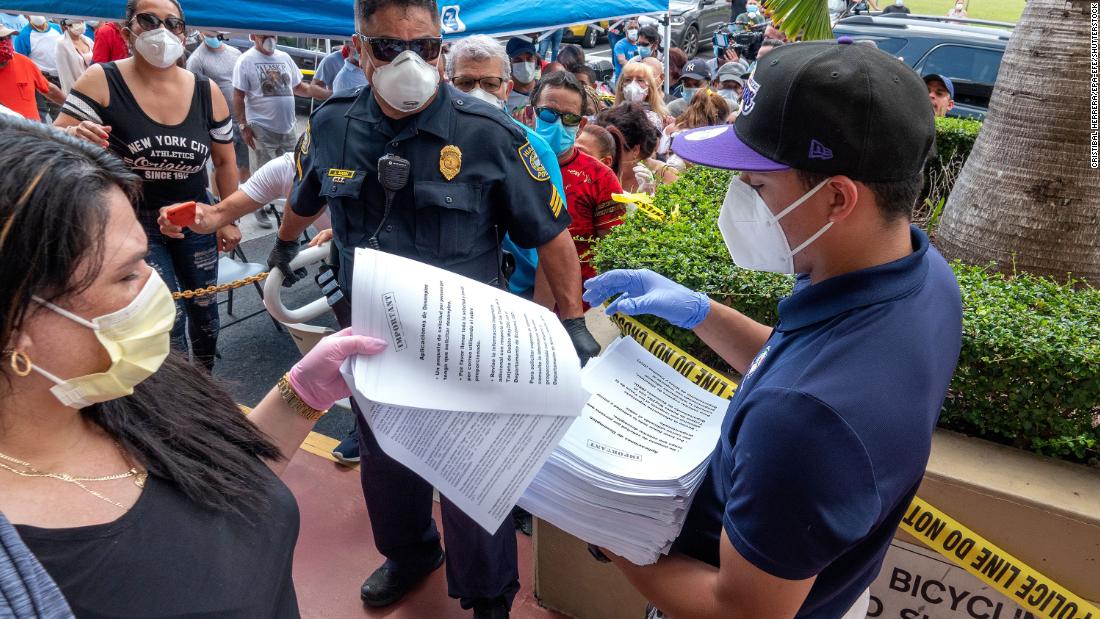
And in Florida, crowds of people have lined up to file paper applications for unemployment benefits after the state’s online and phone systems were also overwhelmed.
— This is a developing story. It will be updated. CNN’s Tami Luhby and Alicia Lee contributed to this report.